Community Wildfire Protection Plan Portal and Data Library
A Data Library for Practitioners and Researchers
Updates In Progress!An updated database is coming in 2026. Check back for more updates!
What is a CWPP?
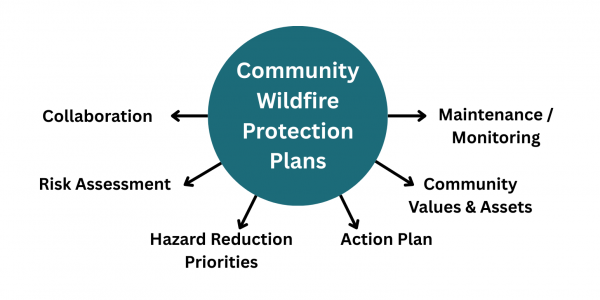
Community Wildfire Protection Plans (CWPPs) are collaborative, community-driven frameworks that outline local priorities for reducing wildfire risk. These plans serve as both a strategic guide and a practical tool to help communities identify hazards, prioritize actions, and strengthen partnerships between residents, fire agencies, land management entities, and other stakeholders.
Core Requirements
Since the passage of the Healthy Forest Restoration Act (HFRA) of 2003, CWPPs have become a cornerstone of community wildfire resilience planning. HFRA established a formal role for communities in shaping wildfire mitigation efforts and set basic requirements for plan development:
Plans must be developed collaboratively with local government, fire departments, and state forestry agencies.
They must identify and prioritize areas for hazardous fuel reduction.
They must recommend measures to reduce structural ignitability.
One of the key strengths of CWPPs lies in their flexibility. HFRA allows communities to tailor their plans to local conditions, values, and capacity. As a result, there is considerable variation in the scope, scale, and goals of CWPPs nationwide. Some focus on small neighborhoods or subdivisions, while others cover entire counties or watersheds. Some emphasize home hardening and public education, while others prioritize large-scale fuel treatments or emergency access improvements.
Why CWPPs Matter
CWPPs do more than document wildfire risk. They help communities organize, prioritize, and take action to reduce that risk while building long-term resilience through collaboration, planning, and access to resources.
Risk Reduction: CWPPs guide strategic, locally tailored wildfire mitigation planning that reflects each community’s unique landscapes and conditions.
Inclusive & Locally Responsive Planning: Because the Healthy Forests Restoration Act (HFRA) gives communities flexibility, CWPPs can reflect local values, address equity considerations, and adapt to diverse risk profiles.
To navigate the CWPP Resource Library, scroll through the gallery to browse available documents by title or type. Use the search bar to quickly find specific resources, or apply filters (e.g., by resource type) to narrow your results. The list can also be downloaded by clicking the three dots and clicking “Download CSV.”
Note: Resources in this library may not reflect the most current guidance for your state. Please contact your state wildfire or forestry coordinator to confirm you are using the most up-to-date materials.
Need resources or information that aren’t included here? We’d love to hear from you. Contact Us!